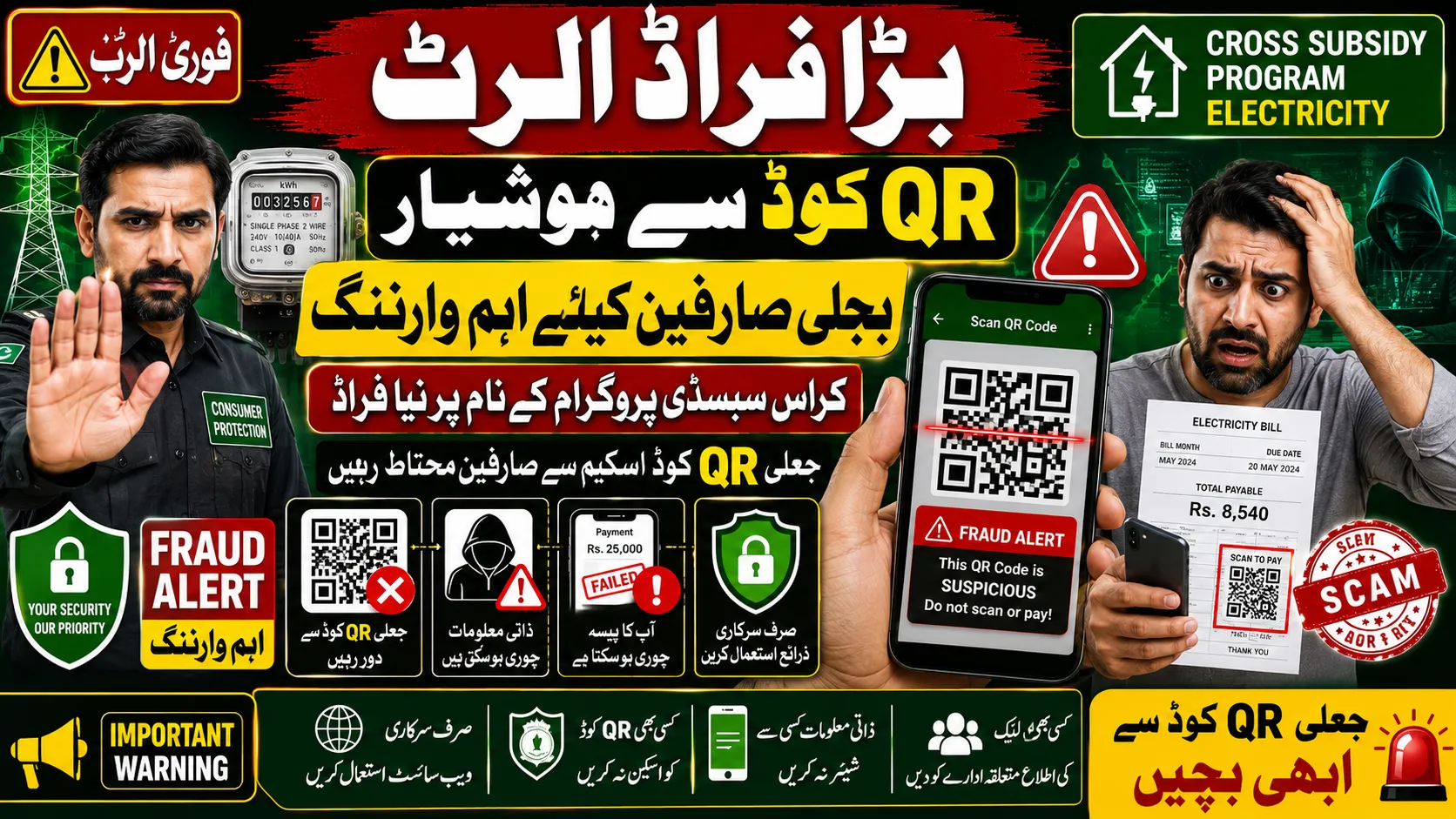
Electricity consumers in Pakistan are being urged to stay alert after reports surfaced about misuse of electricity bill QR codes linked to fake subsidy registration claims.
A growing number of misleading posts and unofficial platforms are attempting to collect electricity bill details from consumers under the name of subsidy verification, discount registration, or relief eligibility checks. This has created serious concerns for users who may unknowingly share sensitive billing information.
If you have received a message asking you to scan, submit, upload, or verify your electricity bill QR code, it is important to proceed carefully.
Electricity Bill QR Code Fraud Alert in Pakistan
Digital scams targeting utility consumers are increasing rapidly, and electricity bill users have become a new target.
Fraudsters may present fake forms, social media campaigns, copied websites, or unauthorized registration pages that appear legitimate. Their objective is often to collect billing data, personal details, or verification credentials.
The QR code printed on an electricity bill can contain information connected to your account verification process. Sharing that information with unknown sources may expose consumers to fraud risks.
Users should never assume that every subsidy-related message is genuine.
What Is Cross Subsidy Program CSS PITC COM PK?
The Cross Subsidy Support initiative associated with PITC has attracted significant public attention because many electricity consumers are searching for subsidy eligibility details and registration information.

As awareness grows, scammers often exploit trending government-related topics to deceive users.
Consumers should understand one critical point:
Only officially recognized communication channels should be trusted for electricity billing or subsidy-related matters.
Unofficial websites, forwarded WhatsApp messages, copied Facebook posts, and unknown registration links should be treated with caution.
Why Scammers Want Your Electricity Bill QR Code
Many consumers think a QR code is harmless because it looks like a simple payment feature.
That assumption can be dangerous.
Fraud actors may attempt to misuse electricity bill information for:

- Fake subsidy enrollment
- Unauthorized account verification attempts
- Personal data harvesting
- Misleading digital registrations
- Fraudulent identity-linked submissions
Even if a website appears professional, that does not confirm legitimacy.
Cybercriminals frequently imitate official designs to gain public trust.
Signs of a Fake Electricity Subsidy Registration Website
Consumers should watch for warning indicators before entering any information.
Common red flags include:
- Urgent pressure messages demanding immediate action
- Claims of “limited-time subsidy approval”
- Requests for QR uploads from unknown sources
- Social media pages pretending to be official departments
- Spelling mistakes on websites
- Suspicious domains unrelated to recognized authorities
- Requests for unnecessary personal details
Scam campaigns often rely on panic and confusion.
Taking a few seconds to verify can prevent major problems.
Applying Process for Cross Subsidy Program
Consumers interested in subsidy-related programs should only follow official announcements and recognized registration mechanisms if eligibility is announced through authorized channels.
Application access typically depends on verified public communication, eligibility criteria, and officially released instructions from relevant departments.
Avoid using third-party portals, unofficial agents, copied forms, or social media links claiming guaranteed approval.
How Electricity Consumers Can Stay Safe
Protecting your electricity billing information should be a priority.
Practical safety measures include:
- Verify every subsidy announcement through official sources
- Never share bill screenshots publicly
- Avoid uploading QR codes to unknown platforms
- Ignore suspicious SMS or WhatsApp messages
- Confirm website authenticity before submitting details
- Do not trust “instant approval” claims
- Report suspicious digital activity
Awareness remains the strongest defense against online fraud.
What To Do If You Already Shared Your QR Code
If your electricity bill information was submitted on an unverified platform, act quickly.
Recommended actions:
- Monitor your electricity account activity
- Contact your electricity provider if unusual behavior appears
- Avoid additional interaction with suspicious sources
- Preserve screenshots of suspicious requests
- Report scam attempts to relevant authorities
Fast response can reduce potential damage.
Public Awareness About Utility Scams Is Increasing
Digital misinformation targeting public service users continues to grow.
As more citizens search for relief programs, billing discounts, and subsidy opportunities, scammers adapt their methods to exploit demand.
Consumers should remain informed and cautious instead of reacting to viral claims.
Reliable information always comes from recognized official communication.
Final Words
The QR code on your electricity bill is not something to share casually.
Fake subsidy campaigns can misuse public trust, especially when people are actively searching for financial support opportunities.
Before entering electricity billing details anywhere online, verify authenticity carefully.
A few moments of caution can protect your information from misuse.