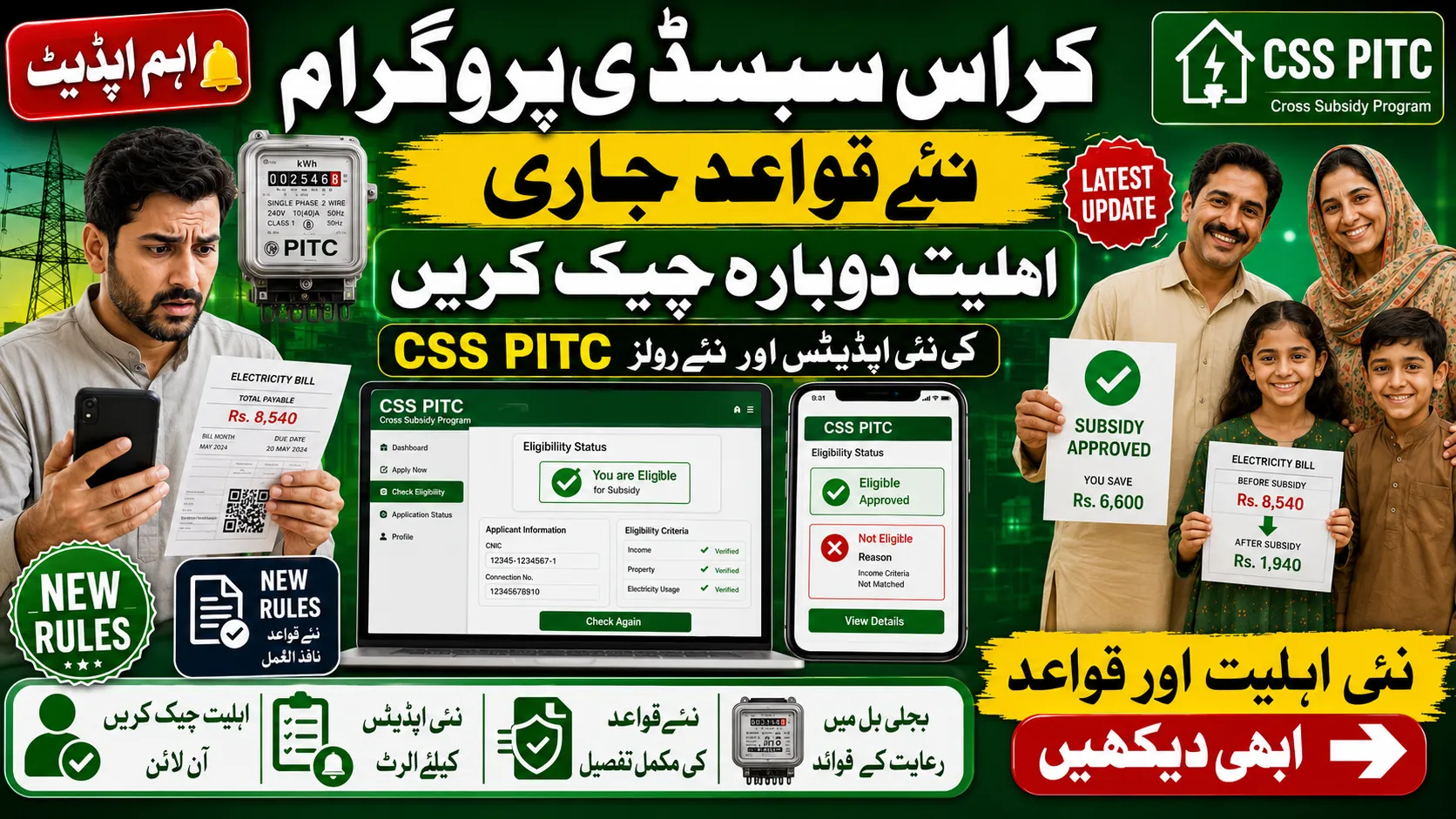
Electricity costs continue to place pressure on household budgets across Pakistan, making relief initiatives a major point of interest for consumers searching for verified support options. The CSS PITC Cross Subsidy Program has gained attention as a topic linked with electricity assistance, eligibility verification, and consumer awareness.
If you are searching for the latest updates, qualification details, application information, and important safety guidance, this complete guide explains everything in a clear and reader-friendly format.
What Is CSS PITC Cross Subsidy Program?
The CSS PITC Cross Subsidy Program is commonly discussed in connection with electricity consumer support mechanisms in Pakistan. The purpose associated with such initiatives is to direct financial relief toward households that may need assistance with rising power expenses.
Rather than distributing identical support across every connection, targeted subsidy systems generally focus on qualifying consumer categories based on policy criteria, usage patterns, and official verification standards.
Interest in this program has increased because many households want updated information about possible electricity bill support, policy changes, and eligibility requirements.
Latest New Rules & Policy Updates
Consumers should understand that electricity-related assistance programs may change depending on government policy decisions, regulatory revisions, and public sector energy reforms.
Recent public discussions have highlighted several important focus areas:
- Greater emphasis on verification checks
- Improved fraud prevention measures
- Digital review systems for consumer validation
- Tighter monitoring of electricity account information
- Increased caution regarding unofficial registration claims
- Enhanced protection for consumer data
(css pitc com .pk)کیا یہ گورنمنٹ کی آفشیل ویب سائٹ ہے؟
Authorities continue encouraging users to rely only on authentic communication channels when checking subsidy-related information.
Who May Be Eligible for Support?
Eligibility depends on the applicable policy framework and verification process. While exact criteria may vary, commonly considered factors include:
Low-Income Households
Families managing limited monthly income may fall within support-focused categories.
Lower Consumption Consumers
Electricity users with modest usage levels may receive priority under certain subsidy structures.
Verified Deserving Families
Households meeting official qualification benchmarks may be considered after review.
Existing Welfare Beneficiaries
Consumers already associated with recognized support databases may potentially align with eligibility checks where relevant.
Final approval always depends on formal assessment.
Applying Process
Consumers searching for the application route usually want a simple overview.
The process generally involves visiting the relevant verification platform, entering required electricity account details, providing identification information where requested, completing validation fields, and waiting for official eligibility review.
Applicants should carefully verify every submitted detail before proceeding to avoid delays, mismatched records, or rejection due to incorrect information.
Required Information Before Submission
Preparing documents in advance helps reduce processing issues.
Commonly requested information may include:
- Latest electricity bill details
- Consumer reference number
- Valid CNIC information
- Registered mobile contact
- Household verification details
- Supporting identity information if requested
Accurate data improves verification efficiency.
Major Warning for Electricity Consumers
Consumer protection has become extremely important due to growing digital fraud risks.
Users should remain alert against fake registration pages, unauthorized websites, suspicious forms, and misleading social media claims requesting subsidy information.
Important precautions include:
- Never share electricity bill QR codes with unknown sources
- Avoid unofficial portals claiming guaranteed approval
- Do not provide CNIC details to unverified platforms
- Ignore messages demanding payment for registration
- Verify announcements through official channels only
Personal billing information can be misused if shared carelessly.
Common Reasons Applications Face Problems
Many consumers experience delays because of avoidable mistakes.
Frequent issues include:
Incorrect Bill Reference Entry
A single typing error may disrupt validation.
Mismatched CNIC Records
Identity details must align with official documentation.
Inactive Contact Number
Communication may fail if the provided mobile number is unavailable.
Incomplete Consumer Information
Missing fields often trigger review complications.
Duplicate Submission Attempts
Repeated entries can create unnecessary confusion in processing systems.
Why This Program Matters for Households
Electricity expenses directly affect financial stability.
For many families, monthly utility payments compete with essential spending such as:
- Food purchases
- School expenses
- Healthcare costs
- Transport needs
- Daily household management
Any legitimate relief measure can improve affordability and reduce budget stress.
Benefits Consumers Look For
Interest in subsidy-related programs continues because potential advantages may include:
Reduced Financial Pressure
Support mechanisms can help households manage utility costs more effectively.
Convenient Digital Access
Online verification improves accessibility for many users.
Transparent Review Systems
Structured validation reduces uncertainty.
Less Physical Paperwork
Digital systems simplify consumer interaction.
Focused Assistance
Support is generally aimed at households needing the most help.
How to Check Status
After submitting information, consumers usually want confirmation regarding review progress.
Status checks typically involve the same verification environment where submission occurred, using registered details or reference information.
Keeping screenshots, confirmation records, and entered information secure can make future tracking easier.
Important Consumer Safety Advice
Search traffic around subsidy programs often attracts misleading content online.
Protect yourself by following these safety practices:
- Trust official sources only
- Never click suspicious registration advertisements
- Avoid sharing personal documents on random websites
- Confirm announcements through authentic government communication
- Report fraudulent claims where possible
Digital awareness protects both financial information and identity records.
Frequently Asked Questions
Is CSS PITC Cross Subsidy Program real?
Consumers should always verify current program availability through official sources before submitting any personal information.
Can I apply online?
If a verified portal is active for the relevant program, digital submission may be available.
Is registration free?
Legitimate public welfare registration processes generally do not require unofficial payments.
What details are commonly requested?
Electricity account information, CNIC details, and contact verification are commonly associated with validation systems.
How long does approval take?
Processing timelines depend on verification workload and applicable review procedures.
Final Words
The CSS PITC Cross Subsidy Program remains a highly searched topic among electricity consumers seeking financial relief and updated eligibility information. As online interest grows, accuracy and consumer caution become more important than ever.
Before sharing personal data or starting any application, confirm authenticity through trusted official channels. Staying informed helps protect your information while ensuring you access genuine support opportunities.
Latest Updates